
EPC explained
A guide to EPC certificates
Essential information about Energy Performance Certificates (EPC), explaining their purpose, and why they are important for property owners and tenants.
What is an EPC certificate?
An Energy Performance Certificate (EPC) is a report that summarises the energy efficiency of a property. It provides details on the property’s energy use and typical energy costs, and recommends ways to reduce energy consumption and improve energy efficiency.
- They are required whenever a property is built, sold or rented in the UK. The certificate is valid for 10 years.
- Properties are rated from A (most efficient) to G (least efficient) based on factors like insulation, heating systems, lighting, etc.
- The EPC report includes recommendations on cost-effective ways to improve the home's energy rating, like upgrading insulation or heating systems.
- It also estimates potential savings on energy bills and costs for making the recommended energy efficiency improvements.
- EPCs allow buyers/renters to compare energy efficiency and running costs between different properties.
- For new buildings, the EPC shows the projected energy rating. For existing buildings, it is based on an assessment.

The aim of EPCs is to promote energy efficiency, reduce carbon emissions from homes/buildings, and enable informed decisions when buying or renting based on long-term energy costs.
When do I need an EPC?
The Energy Performance Certificate (EPC) remains valid for 10 years. So when selling, renting or having major renovations within that period, you can use the existing certificate if it is still valid.
Failure to obtain and provide an EPC when legally required can result in fines. Making it an important legal requirement.
You need an EPC in the following situations:
When selling a home or building
An EPC is legally required when selling a property in the UK (home, commercial building, etc.). The seller must provide a valid EPC to potential buyers.
When renting out a property
If you are a landlord renting out a home or commercial premises, you must obtain an EPC and make it available to prospective tenants when marketing the property to rent.
For newly built properties
EPCs are mandatory for new construction – both residential and commercial buildings. The builder must provide an EPC for the new property.
When making significant renovations
If you are renovating a property and the work requires a building permit, an updated EPC may be needed depending on the extent of renovations.
For public buildings over 500 sq metres
Large public buildings like schools, hospitals, leisure centres etc. over 500 square metres must display a valid EPC in a prominent place.
Where do I find an existing EPC certificate?
There are a few places you can find an existing Energy Performance Certificate (EPC) for a property:
From the property owner/seller: When selling or renting out a property, the current owner should be able to provide you with a copy of the existing valid EPC for that building.
EPC Register: There are official online EPC registers where you can search for and download EPCs.
These include:

To search, you’ll need the postcode and either the property report reference number (UPRN) or address.
Estate agent/letting agency
If you are buying or renting through an agent, they should be able to access the EPC details for you from the property listing.
EPC Accreditation Schemes
Bodies that accredit domestic and non-domestic energy assessors often have EPC search tools on their websites, e.g. Landmark, NHER, Stroma.
Previous home reports
The EPC may be included in any home reports/survey documents from when the current owner purchased the property.
If you cannot find an existing in-date EPC through these routes, then a new assessment will likely need to be carried out by an accredited energy assessor.
How do I get a new EPC?
To get a new Energy Performance Certificate (EPC) for a property, you’ll need to hire an accredited energy assessor. Here are the typical steps:
Find an accredited assessor
Look for domestic energy assessors if it’s for a home, or non-domestic assessors for commercial properties. They must be accredited by an approved accreditation scheme like Stroma, Elmhurst, ECMK, CIBSE, etc.
Get quotes
Contact several accredited assessors and get quotes for conducting the EPC assessment on the property. Costs can range.
Book the assessment
Once you’ve selected an assessor, book an appointment for them to visit and inspect the property.
The assessment visit
The assessor will come to the property and carry out a detailed inspection, noting factors like heating systems, insulation, glazing, lighting, ventilation, etc. This normally takes 1-2 hours.
Produce the EPC
Using approved software, the assessor will input the property data to calculate the energy efficiency rating, potential savings, and recommendations. They will then issue you the EPC document.
EPC register
The assessor is required to upload the new EPC details to the official register for your region (England/Wales/Scotland/N.Ireland).
You’ll receive the full EPC report which rates the property from A-G, for energy efficiency and environmental impact – A (most efficient) to G (least efficient). It includes recommendations for cost-effective improvements too.
The whole process, from booking to receiving the EPC, usually takes around 1-3 weeks. The certificate is then valid for 10 years.
How do I improve my EPC rating?
There are several ways you can improve the EPC rating of your property:
Upgrade insulation
Adding or improving insulation in areas like lofts, walls, and floors can significantly reduce heat loss and improve energy efficiency.
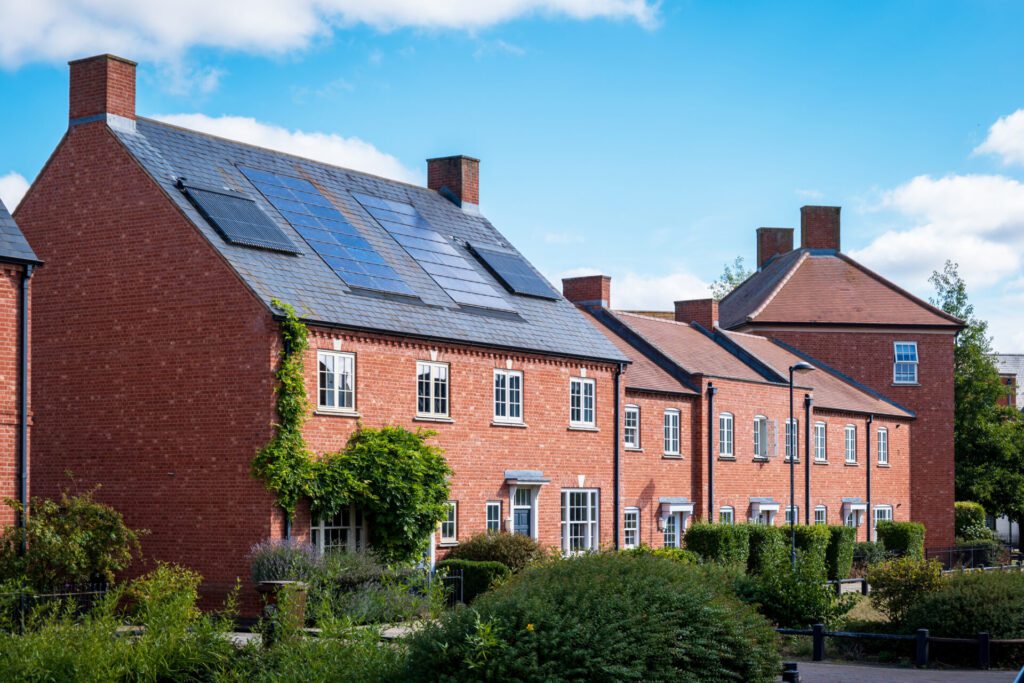
Install solar panels
Adding solar photovoltaic (PV) or solar thermal panels will significantly cut your home’s carbon footprint.
Upgrade heating system
An inefficient old boiler or heating system can drag down your rating. Installing a new condensing boiler or renewable heating like solar PV and heat pumps can make a big difference.


Use low-energy lighting
Swapping traditional bulbs for LED or other low-energy lighting throughout the property saves electricity.
Improve air-tightness
Sealing drafts, adding weatherstripping, and improving the air-tightness of the building fabric prevents heat loss.
Upgrade appliances
Replacing old appliances like fridges and washing machines with modern, high-efficiency models uses less energy.
Install smart heating controls
Programmable thermostats and smart heating controls allow better regulation of heating use.
Install double/triple glazing
Replacing old single-glazed windows with double or triple-glazed units will improve insulation and reduce drafts.
The key is tackling the recommendations specific to your property’s EPC report. Combining several of these improvements can raise your home’s rating from G to A/B in some cases.